
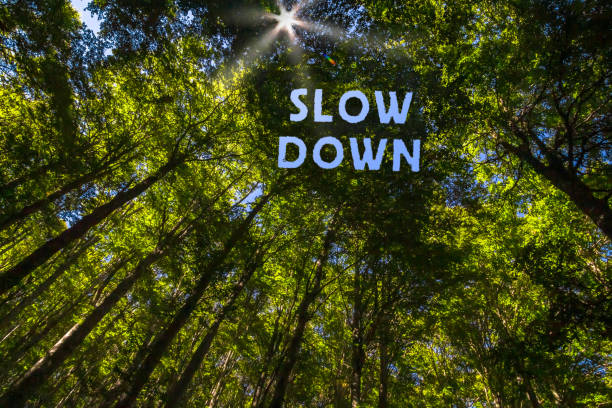
We live in a time where being busy is almost like a badge of honor. If someone asks, “How are you?” and you reply, “Very busy,” it somehow feels important. Productive. Needed. But somewhere in between deadlines, notifications, social media scrolling, and endless to-do lists, many of us forgot how to just live.
That’s where slow living comes in.
Slow living is not about being lazy or doing nothing. It is about doing less — but doing it with more intention. It is about choosing quality over quantity, presence over pressure, and meaning over speed. It sounds simple, but in today’s world, it can feel almost rebellious.
What Is Slow Living, Really?
Slow living is a mindset. It means making conscious decisions about how you spend your time, energy, and attention. Instead of rushing from one task to another, you slow down and ask yourself: Is this necessary? Is this meaningful?
It can look different for everyone. For some, it might mean waking up without immediately checking the phone. For others, it might mean cooking a simple meal at home instead of ordering fast food every night. It might mean saying “no” to social plans that drain you and “yes” to a quiet evening with a book.
The goal is not to escape responsibilities. The goal is to stop living on autopilot.
Why We Are Always in a Hurry
Modern life is built around speed. Fast internet, fast food, fast fashion, fast success. Social media constantly shows us people achieving more, traveling more, earning more. It creates a silent competition. You start feeling like if you are not moving quickly, you are falling behind.
But here is the truth: moving fast does not always mean moving forward.
Many people are exhausted, even if they cannot explain why. They are mentally tired, emotionally drained, and physically restless. This constant rush creates stress, anxiety, and sometimes even a strange emptiness. You can achieve everything on your checklist and still feel unsatisfied.
Slow living challenges this idea. It asks: What if the problem is not that you are doing too little, but that you are doing too much of what doesn’t matter?
The Beauty of Doing Less
When you intentionally reduce the noise in your life, something interesting happens. You start noticing small things again. The taste of your morning tea. The sound of birds outside. The feeling of sunlight on your face.
These moments seem small, but they are the actual substance of life.
Doing less also improves focus. When you are not multitasking all the time, you can give your full attention to one thing. Work becomes more meaningful. Conversations become deeper. Even rest becomes more refreshing because you are not distracted by guilt.
There is also freedom in simplicity. Fewer commitments mean more space. Fewer possessions mean less clutter — not just in your house, but in your mind.
Practical Ways to Practice Slow Living
Slow living does not require dramatic changes. You do not need to move to the mountains or quit your job. Small shifts can make a big difference.
Start with your mornings. Instead of jumping straight into emails or social media, give yourself ten quiet minutes. Stretch. Breathe. Drink water. It sounds basic, but it changes the tone of your entire day.
Another step is to simplify your schedule. Look at your weekly commitments and ask which ones truly matter. It is okay to cancel or postpone things that are not essential. Your time is limited, and protecting it is not selfish.
You can also slow down your consumption. Buy fewer things, but choose them carefully. Eat slowly instead of rushing through meals. Watch one meaningful show instead of endlessly scrolling through random videos.
And maybe most importantly, learn to say no. Every “yes” to something unimportant is a “no” to your peace.
Slow Living and Mental Health
There is a strong connection between slowing down and mental well-being. When you reduce constant stimulation, your mind gets space to breathe. Anxiety often comes from feeling overwhelmed and out of control. Slow living creates a sense of structure and clarity.
It also encourages self-awareness. When you are not constantly distracted, you begin to notice your thoughts and emotions more clearly. You understand what triggers stress, what brings joy, and what drains your energy.
This awareness helps you make better choices. Instead of reacting automatically, you respond thoughtfully.
The Fear of Missing Out
One of the biggest obstacles to slow living is FOMO — the fear of missing out. We worry that if we slow down, we will miss opportunities, experiences, or success.
But the truth is, you are always missing something. There are endless events, trends, and possibilities happening at the same time. Trying to catch all of them is impossible and exhausting.
Slow living teaches you to accept that you cannot do everything — and that’s okay. When you choose fewer things, you can enjoy them more deeply.
It is better to fully experience one meaningful moment than to half-experience ten rushed ones.
Redefining Success
Society often defines success by external achievements — money, status, titles. Slow living invites you to define success differently. Maybe success is having enough time for your family. Maybe it is feeling calm at the end of the day. Maybe it is sleeping peacefully without stress.
When you stop measuring your life by comparison, you start measuring it by contentment.
And contentment is quiet. It does not shout. It does not compete. It simply exists.
It’s a Process, Not Perfection
Slow living is not about perfection. You will still have busy days. There will be deadlines, responsibilities, and moments of chaos. That is normal.
The art of doing less is about awareness. It is about catching yourself when you are rushing unnecessarily. It is about choosing presence whenever possible.
You do not need to transform your life overnight. Start small. Remove one unnecessary task. Create one peaceful ritual. Take one deep breath before reacting.
In a world that constantly pushes you to do more, be more, achieve more — choosing to slow down is powerful. It is a quiet form of courage.
Because sometimes, doing less is exactly what allows you to live more.


